


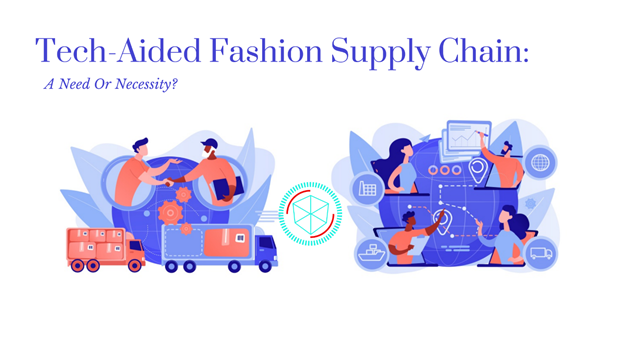
Tech-Aided Fashion Supply Chain: A Need Or Necessity?
The fashion industry had hit a halt during the
pandemic. There was a realization of incompatibility within the supply chain
and huge losses were incurred. The UK retailers had sustained a loss of $2.66
billion each week during Christmas. Although the hassles of the traditional
supply chain have been adhered to for over decades. The pandemic was a
real-time deal for retailers and brands.
Learn The Potential With Tech

Similarly, it’s high time we address the
limitations of the traditional fashion supply chain and move towards
digitalization. When we say digitalization, we do not mean eCommerce alone.
eCommerce is a part of digitalization which many brands have adapted over time.
However, the need of the hour is to adopt a technology-aided mechanism that
adds value to our existing supply chain. But, how do we do that? That’s the
actual hurdle most brands and retailers are met with.
Save Time, Money, & Resources With Value Chain
Harindar Keer tells us to focus more on the
value chain of fashion industry rather than the supply chain of fashion industry. His fashion-tech company, FlixStock,
is bringing in solutions to contribute to the value chain and enhance the
supply chain experience for other businesses. While many fashion businesses are
trying to make the change, there are many still unaware of their potential.
They still need to recognize the gaps in their working process. With eCommerce
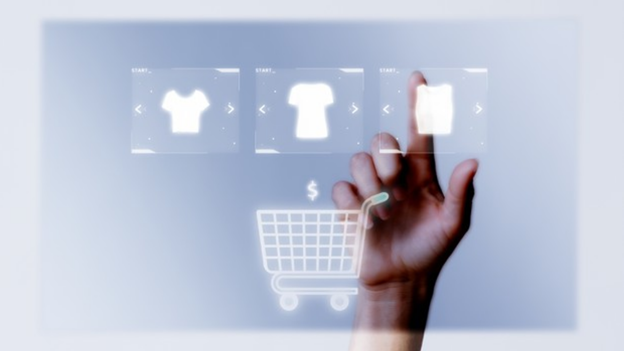
emerging, brands have understood the potential of selling online. About 69% of
the consumers in the USA have switched to online shopping. Thus they’ve
considered making user experiences more convenient and have opted for
M-commerce design solutions as well.x
However, what this doesn’t cover is the aspect
of working within. From sourcing raw material to get a product to the consumer,
there’s a lot more involved than seen. This is where we must let technology
play its part. Tech-driven solutions are not only efficient but also
cost-effective. They let you skip the trivial processes and help you build a
sustainable supply chain. To get a better understanding of how technology helps
build a value chain, we need to dig deeper into some of the recurrent obstacles
and their technological counterparts.
AI-Product Imagery & Cataloging
Producing images for your online portals is an
essential step you can’t skip. It helps you increase your conversion rates and
enables your audience to connect with the product more easily. This is because
a majority of people voted for the lack of physical visibility of products as a
drawback of online shopping. Thus, the better the product imagery, the better
you connect with your target audience. However, preparations for a photoshoot
each time you want to launch a collection online can wear you down. From
selecting models to booking makeup artists, there’s a lot involved in the
process. Be it studio rentals or post-production, a photoshoot can make you
expend over budget.
This is where AI-generated imagery can be very
helpful. The process uses Artificial Intelligence to conduct photo shoots and helps
you convert tech packs into on-model imagery. This simple process requires
minimal inputs such as tech packs or even garment sketches. Using AI
technology, you can generate 3D garments and put them on mannequins or models
as per your requirements. Further, you can use those images on your eCommerce
platforms as well as social media platforms for marketing. This was a general
overview of AI product
imagery. Now let’s talk about
other benefits that come along using AI product imagery.
AI imagery gives you the advantage of choosing
unique faces for your brand. It includes models of different ethnicities,
sizes, and body types. This feature enables you to market your product to a
wider audience. With a single tech pack or AI-generated imagery, you can put
virtual clothing on models of different age groups and sizes. Many brands use
this technology to draw in more customers to their products. Brands have also
opted for Spin Photography to make their catalog images more interactive. Spin
photography refers to the style of imagery that produces an illusion of a
rotating object. You can use this technology to eliminate the gap of physical
touch and ensure your consumer can view the product from all possible
dimensions.
The Concept Of Virtual Sampling
Sampling is an eminent aspect of product
manufacturing. However, the challenges of getting to that one right sample are
not unknown. There’s so much time and effort involved in the process. Sample
over samples are manufactured again and again over minute details. This not
only delays the production but also ends up amounting to the waste produced.
Thus, the value chain providers need to intervene in the supply chain to make
it more sustainable and eco-friendly.
One such technology that has recently been
embraced by top retailers across the globe is virtual or 3D sampling. This
process has changed the whole idea of sampling. It really feels light on your pocket
and makes the process a lot faster than the conventional one. It enables you to
make multiple changes and quick follow-ups. Thus, leading to fast-paced
results. You can use a suitable virtual sampling
software and skip the need of
going through several sampling stages.
All you need is a tech pack or a sketch that can
be converted into a 3D sample using Ai technology. It prohibits the need to
manufacture a physical sample before production. It is one of the leading value
chain solutions and helps you cap your overall costs.
Personalize User Experience

Personalizing your brand experience makes your consumer aware of the fact that you are concerned about their choices. In the retail industry, one needs to keep their consumer’s needs above everything if they wish to sell the products they manufacture. This is the very reason why trend reports are researched and worked around the year by brands. It is very important to understand the requirements of your audience to satisfy them. Here is when personalization has helped businesses procure their value among their consumers. Selling them the right thing at the right time can be a game-changer for you.
The Bigger Picture
We’ve talked about the limitations of the current fashion supply chain and also discussed the tech-aided solutions that can help you fill the gaps. However, the question that still remains unanswered is how do we adapt? Or are we ready to adopt yet? Yes, the loss and damage that the retail industry has gone through over the last year should be enough to suffice your answer. We shouldn’t wait for another wake-up call. It’s time we adapt to technology for the betterment of our supply chain. To provide the consumers with the value they seek, we must take on ourselves to switch to digitalization. It will help us become more efficient and cut our overall expenditures too.

